
URI CS Education Research:
AI-Powered Personalized Learning That Responds to Every Student
CuraAdapt detects each learner's knowledge gaps and generates personalized re-teaching
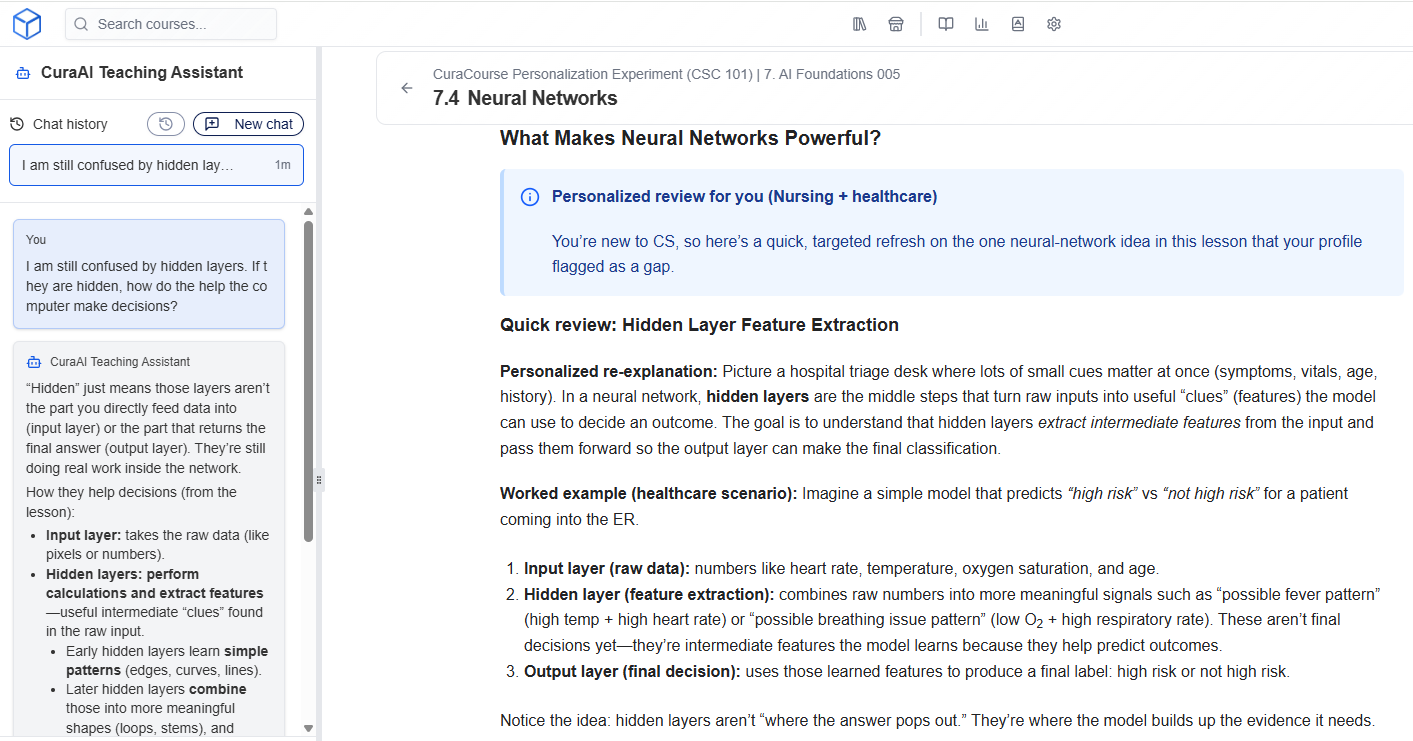
The Problem With One-Size-Fits-All E-Textbooks
Traditional digital textbooks, even interactive ones, present identical content to every learner. When a student fails an in-lesson check, nothing changes or more standard content is shown. The lesson moves on. Gaps compound.
This is the problem CuraCourse and CuraAdapt were built to solve.
❌ Without CuraAdapt
Every student sees the same lesson content
Failed formative checks go unaddressed
No personalization to interests or career goals; motivation wanes
Gaps persist and compound across lessons
✓ With CuraAdapt
Gaps detected automatically from in-lesson formatives
Personalized reteach generated instantly, inline
Anchored to each learner's field, interests, and background
Mastery-triggered — only when and where needed
How CuraAdapt Works
CuraAdapt integrates directly into the CuraCourse e-textbook. It operates in three stages as a student works through a lesson:
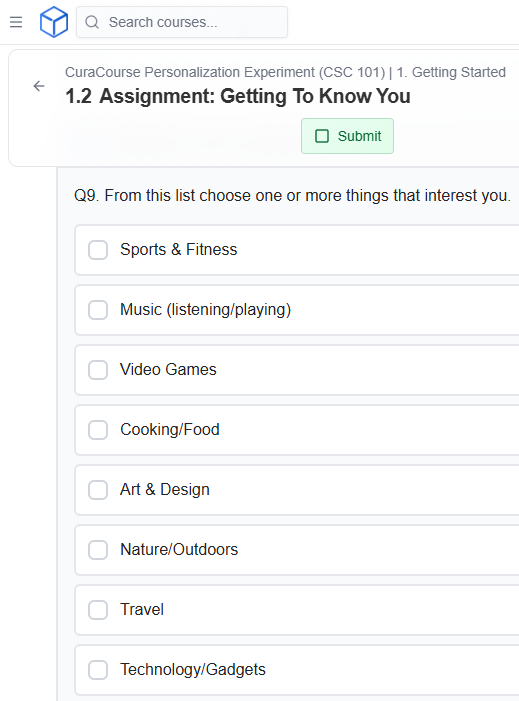
① PROFILE
Learner Profile Build
The student's interests, field of study, career goals, and topic background are compiled into a structured learner profile.
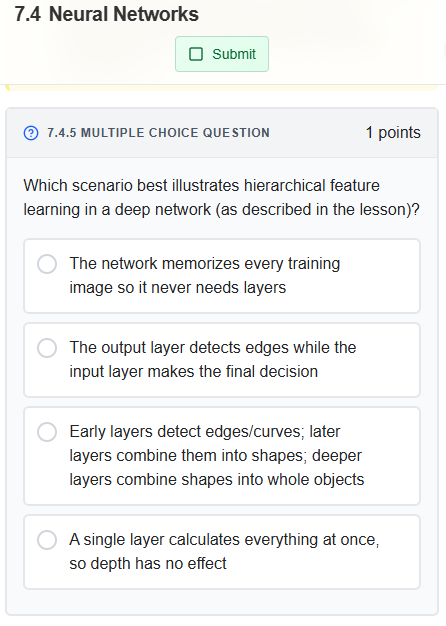
② DETECT
Gap Detection
CuraAdapt uses an internal knowledge graph of concepts in the course to detect gaps in student learning (mastery assessment).
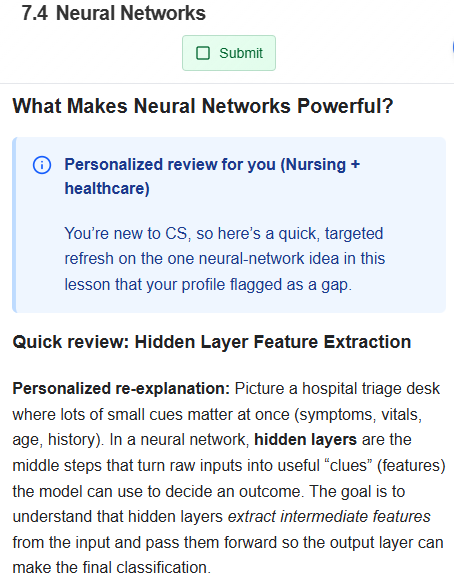
③ RETEACH
Personalized Content Generation
CuraAdapt inserts inline targeted reteach material, anchored to the student's own interests and goals, for each gap concept.
Research Questions
Our pilot study, conducted jointly by CuraCourse Inc and the University of Rhode K12 CS Group, addressed three core feasibility questions:
RQ1 · Learning
Does personalized reteach improve learning?
Within each learner, do gap concepts that receive CuraAdapt's reteach gain more on a neutral cumulative assessment than a matched held-out control concept?
RQ2 · Generation Quality
Can CuraAdapt reliably generate high-quality content?
Is the generated reteach instructionally accurate and genuinely personalized to the individual?
RQ3 · Acceptability
Do learners find it useful?
Do students rate the personalized reteach as more relevant, engaging, and helpful than standard presentation, and prefer it?
Study Design
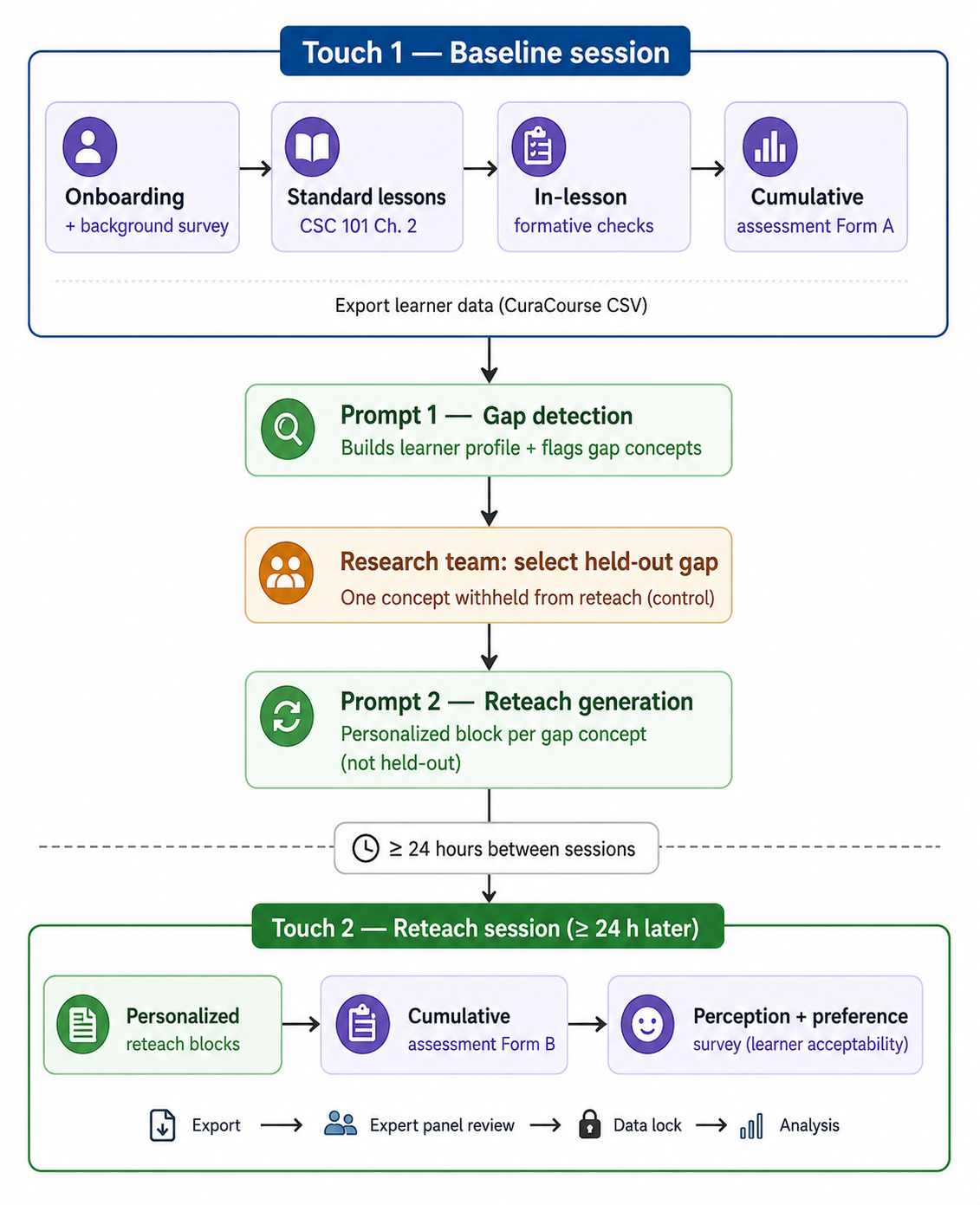
The pilot used a rigorous within-participant design that controls for practice effects, re-exposure, and regression to the mean.
Participants
N = 14 students in CSC 101 (AI Foundations) at URI. Diverse fields of study, CS experience levels, and first-generation status.
Materials
CuraCourse Chapter 2 (AI Foundations); concept knowledge graph; parallel cumulative Forms A/B; learner perception & preference survey.
Control Condition
One gap concept per participant is held out: standard lesson only, no personalized reteach added. Cancels practice, re-exposure, and regression-to-the-mean confounds within each learner.
Safety & Quality Gate
All generated reteach blocks are reviewed for correctness by the research team before any learner sees them. Post-study, all blocks rated by the full 5-member expert panel.
Pilot Study Findings
A within-participant pilot (N=14, CSC 101 AI Foundations chapter) yielded three headline results across the three feasibility dimensions. These findings establish technical feasibility and learner acceptance, and set up a fully powered efficacy evaluation.
3.99 / 4
Expert Accuracy Rating
Mean instructional accuracy across all generated reteach blocks, rated by a 5-member expert panel, with zero factual errors flagged across all 40 blocks.
100%
Genuine Personalization
Percentage of generated blocks rated ≥ 3/4 on personalization fidelity (mean 3.67), anchored to the individual learner's field, interests, and goals.
11 of 11
Preferred the Personalized Version
Students who expressed a preference chose CuraAdapt's reteach for the rest of the course over the standard lesson (exact p = 0.001); 71% said they would want the feature.
Expert Panel Agreement
Accuracy: 97% exact agreement · Fidelity: ICC(2,k) = 0.58
Reliable inter-rater agreement across the five-member heterogeneous reviewer panel (content author, college AI instructor, K-12 educator, CS-ed researcher, recent CS graduate). All reviewers rated all generated blocks — a census, not a sample.
Learner Preference
Among learners who expressed a preference, the personalized version was favored on every item (89–100%; primary item 11 of 11, p = 0.001).
On a head-to-head forced choice, learners favored the CuraAdapt reteach over the standard lesson; a separate before/after attitude survey showed no significant change, making the forced choice the more sensitive measure.
Learning outcome
Learners improved markedly on previously-failed gap concepts after personalized reteach (mean gain +0.95). Because the within-participant contrast saturated at a measurement ceiling, the per-concept learning advantage could not yet be isolated. This establishes the powered efficacy test as the central goal of the proposed Phase II work.
These results demonstrate the technical feasibility and learner acceptance of AI-Powered Personalized Learning.
Victor Fay-Wolfe and Ilanna Langton | Department of Computer Science, University of Rhode Island